10 Common Mistakes That Damage Coral Reefs (and How to Avoid Them)
Coral reefs are among the most fragile habitats on Earth, and almost all the damage visitors do to them is accidental. A misplaced fin, an anchor dropped twenty metres from where it should have gone, a handful of shells slipped into a pocket. Small decisions, repeated by millions of people, add up quickly.
The encouraging part is that nearly every one of these mistakes is easy to avoid once you know what to look for. Below are the errors we see most often on the reef, and what to do instead.
Standing on the reef, and the fin kicks you never notice
Coral looks like rock. It is not. A living reef is a thin skin of animal tissue stretched over a limestone skeleton, and it is far more delicate than it appears. Standing on a coral head cracks the skeleton and crushes the polyps inside. Even a light brush strips away the layer of mucus that protects the colony from infection, and a scratch from a fin tip can take years to grow back — if it grows back at all.
Fins are the more common culprit, because you rarely feel or see the contact. If you are snorkelling in shallow water with your legs angled downwards, every kick drives water — and sometimes your fins themselves — straight into the reef.
Where to put your hands, feet and fins
- Keep at least a metre of clear water between you and any coral; two metres if you are new to snorkelling or diving.
- If you need to stop, adjust your mask or catch your breath, float on your back or hover still. Do not stand up on the reef, even briefly.
- Hold the boat's tag line or a surface float if you need to rest. That is what they are for.
- Keep your kicks slow, small and horizontal. Learn the frog kick or a modified flutter if you dive — both naturally keep your fins up and away.
- Look behind you before you turn, and never reverse into a coral head to frame a photograph.
If you genuinely have to put a foot down, look for bare sand well away from any coral, and accept that even that stirs sediment, which can smother nearby polyps.
Sunscreen, dangling kit and other everyday choices
Some chemical sunscreen filters, including oxybenzone and octinoxate, have been linked to coral damage, and a number of reef destinations have restricted them. Mineral filters such as zinc oxide and titanium dioxide are the safer choice. Apply 15 to 30 minutes before you get in the water so it binds to your skin rather than rinsing off into the shallows. The rinse-off matters as much as the product.
Better still, reduce how much you need. A long-sleeved rash vest, a hat and leggings mean less exposed skin, less sunscreen and less swimming effort. Sunburn is a genuine risk, so do not skip protection — if you are unsure which product suits your skin, ask a pharmacist.
Kit is the other quiet offender. Gauges, torches, cameras and spare regulators that hang loose drag across coral as you swim. Clip everything close, check nothing dangles below your waist, and secure mesh bags properly: a loose plastic bag blows away in seconds and ends up wrapped around a coral head.
Chasing, feeding and touching wildlife
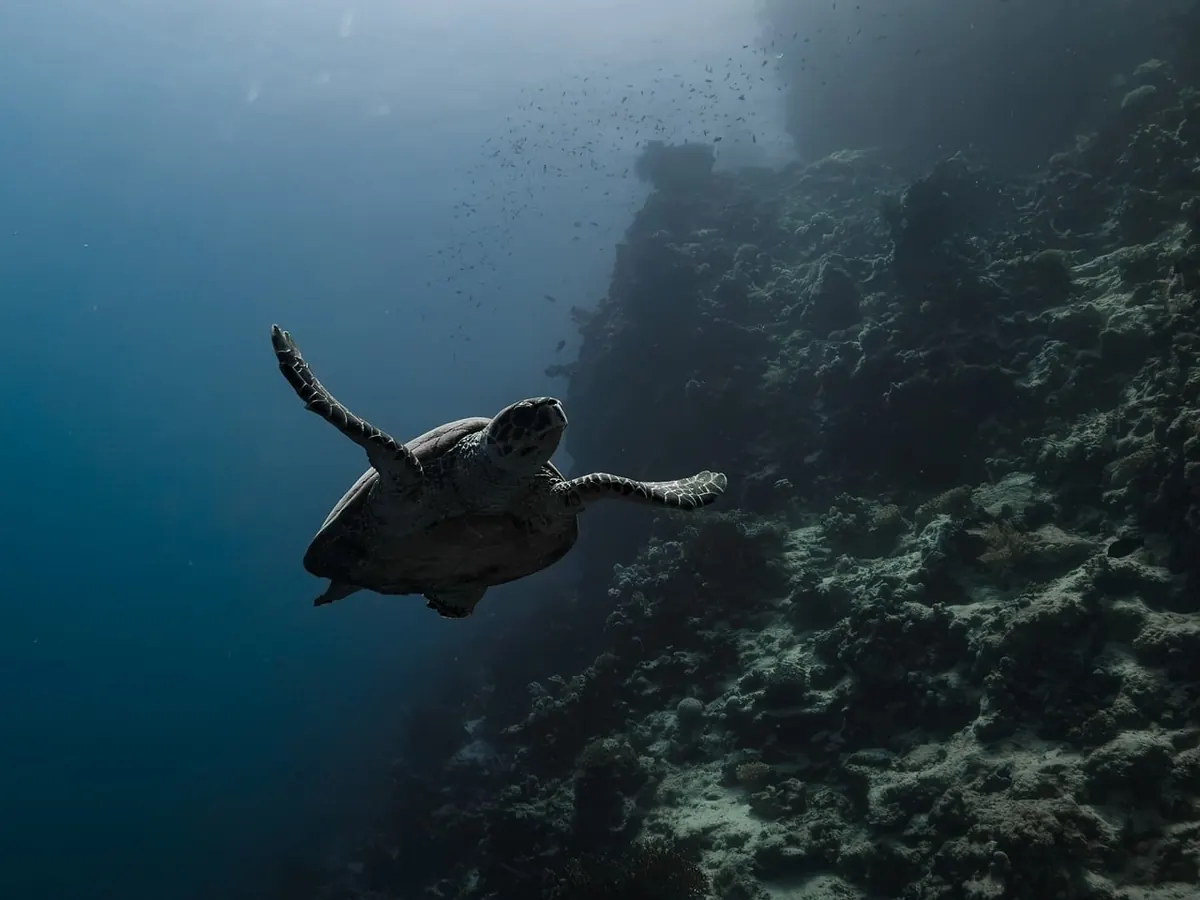
Feeding fish changes their behaviour permanently. They learn to mob people, lose some of their natural foraging habits, and can become aggressive towards the next swimmer who has no food. Chasing turtles, rays and octopus forces them to burn energy they need for feeding and cleaning, and it often drives them off a reef altogether.
Touching is worse. Your hands carry oils, sunscreen and bacteria, and they strip the protective coating from an animal's skin. Some species sting or bite in return, and turtles can carry infections.
Give wildlife several metres, and let the animal decide how close it comes. Move slowly, never block its path or trap it against the reef, keep camera flashes out of its eyes, and resist the urge to ride or hold anything. Gloves are worth a thought too: some sites require them for safety, but they can make you braver than you should be around coral.
Anchors, moorings and careless boat handling
An anchor chain sweeps in a wide arc as a boat swings, and that arc can scrape a reef flat bare in a single afternoon. If a designated mooring buoy is available, use it — it takes seconds and costs nothing. Anchoring on coral is illegal in many marine protected areas, and penalties are enforced.
Where there is no buoy, anchor in sand well clear of coral, set enough scope, and look over the side before you commit. Avoid seagrass beds, which are nursery habitat for reef fish and are protected in many places.
Under way, keep to marked channels, drop to idle speed in the shallows, and remember that prop wash scours the seabed long after you have passed. Watch the tide: a reef flat can sit under a metre of water at high tide and be inches deep an hour later. Give snorkellers and divers a wide berth, slow down for their flags and floats, and never beach a boat on a reef flat for a picnic.
Buoyancy: the mistake that even experienced divers make
Poor buoyancy is the single biggest cause of diver damage. If you are constantly sculling to stay off the bottom, you are not in control of your position, and sooner or later your fins will catch the reef. The fix is practice, not good intentions.
- Do a proper weight check with a nearly empty cylinder at the end of a dive, then adjust.
- Practise in a pool or over open sand before you go anywhere near coral.
- Add and dump air in small bursts, and give it a few seconds to take effect. Chasing your buoyancy up and down is what breaks things.
- Use your breathing. Slow, deep breaths move you gently without touching your inflator.
- Take a buoyancy specialty course if you have never done one — it usually improves your air consumption too.
- If you truly need a point of contact, use one finger on bare rock, never on live coral, and never on silt.
A reef does not need you to be perfect. It needs you to be careful, and to leave it exactly as you found it.
Souvenirs, rubbish and what gets left behind
Shells, coral fragments and even sand are habitat. Hermit crabs need those shells, and dead coral rubble becomes the anchor point for new growth. Collecting is restricted or banned in many places, and buying coral or shell products abroad encourages the same trade.
Rubbish is a slower killer. Fishing line cuts into coral and tightens as the colony grows, plastic bags smother polyps and block light, and cigarette butts leach chemicals for years. Secure your own gear with clips and lanyards — a lost torch is a small loss to you and a lasting one to the reef. Take everything back to the boat, and if you spot tangled line or ghost gear, tell a dive operator or local marine authority rather than trying to free it yourself.
A simple routine that works
Reef-friendly diving and snorkelling is not complicated. It is a set of habits, applied every time you get in the water.
- Before booking: ask whether the operator briefs on reef etiquette, uses mooring buoys and keeps groups small. Feeding fish or sharks is a warning sign.
- On the boat: listen to the full briefing, note any protected zones and follow the guide's route.
- In the water: buoyancy first, hands to yourself, distance from the reef and from wildlife.
- At the end of the day: take your rubbish back, rinse and check your kit, and report anything you saw damaged.
None of this makes a trip less enjoyable. Being able to hover a metre above a reef, watching without touching, is the whole point. Do that, and the reef is still there for the next person — and for the generation after them.
Photo: Franziska_Stier / Pixabay