Coral Restoration Methods Compared: Coral Gardening vs Biorock vs Larval Seeding
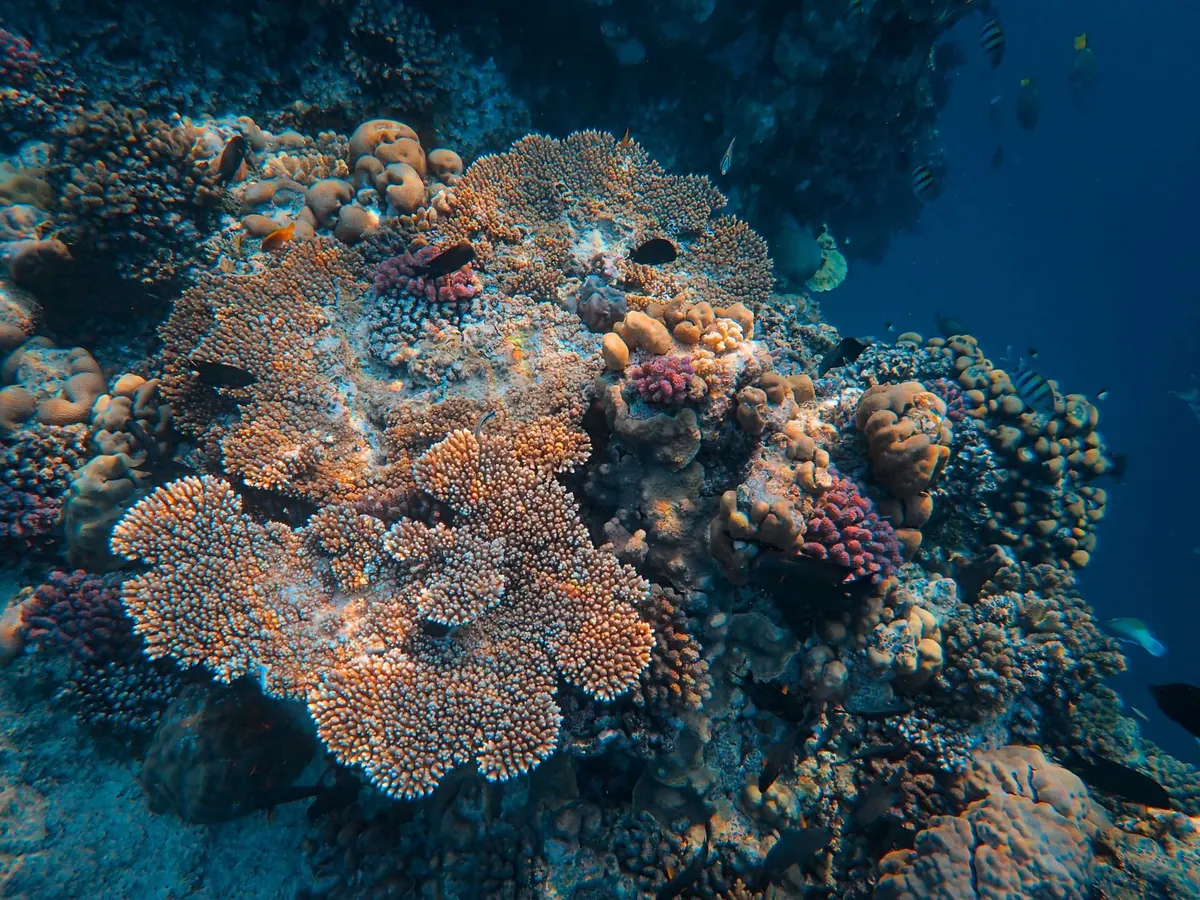
A reef flat that has lost its branching corals rarely comes back on its own. Rubble shifts, algae move in, and the larvae drifting past find nothing solid to settle on. Restoration is the attempt to break that loop, and no single method suits every site. Three approaches dominate warm-water work: coral gardening, Biorock mineral accretion, and larval seeding. They differ in cost, in the scale you can realistically work at, and in how many corals are still alive a year later.
Three approaches, three different bets
Every restoration method is a wager. Gardening bets that fast clonal growth and cheap fragments will beat the reef's decline. Biorock bets that engineered substrate and a small electric current change the conditions enough for corals to thrive where limestone alone will not hold. Larval seeding bets on genetic diversity and on species that simply cannot be grown from cuttings.
- Coral gardening — fragments of opportunity are grown in nurseries, then cut back onto the reef. Low cost per coral, high output, but every fragment is a clone.
- Biorock — fragments are fixed to steel frames carrying a low-voltage direct current. Minerals accrete on the metal, giving corals a raised, sediment-free surface.
- Larval seeding — spawn is collected during mass spawning nights, larvae are reared in tanks and settled onto tiles, and the tiles are planted into the reef.
Notice what each one needs before it does anything useful. Gardening needs diver hours and a nursery site. Biorock needs a power supply, an anode and cathode, and someone to clean the frame. Larval seeding needs tanks, a boat on the right night, and people who can identify a spawn slick at dusk.
Coral gardening: cheap, fast, repetitive
Fragments are collected from storm-broken branches, or from healthy donor colonies, and hung on ropes, frames or mid-water trees. After a few months of growth they are cut into new fragments, and the surplus is outplanted with epoxy putty or cement onto prepared rock. The nursery keeps producing, so one collection trip can fund several years of planting.
Two things determine whether it works. First, nursery siting. Deeper, cooler water can push growth rates up, but those corals may be poorly prepared for the hotter, brighter conditions at the outplant site — matching nursery conditions to the target reef is generally more useful than chasing maximum growth. Second, timing. Outplant before the warmest months where you can, so colonies have a cool season to attach and stabilise.
Its limits are genetic and taxonomic. A thousand outplanted staghorn fragments may represent a handful of genotypes, and if a disease or heat event hits one, it hits most of them. Massive and boulder corals, which are central to reef structure, fragment poorly and are largely left out.
Biorock and mineral accretion: engineering the substrate
Also called mineral accretion, this technique passes a low current between a steel frame and a sacrificial anode. Calcium carbonate and brucite precipitate onto the frame, forming a hard, slightly alkaline surface. Corals are attached to the structure and grow across it.
Project reports often describe faster growth and better survival through bleaching events than nearby reference colonies, and the raised frame does keep corals clear of shifting sand. The honest caveat is that much of this evidence comes from project monitoring rather than independent, replicated studies, and results vary between sites. Treat the more dramatic claims with caution.
Practical drawbacks matter as much as the science. Power must be reliable: solar panels, cables and connections need regular attention, and when the current stops the structure begins to corrode. Frames are vulnerable in storms, and permitting for electrical installations in the sea is a heavier process than for a rope nursery. Biorock works best as a small, well-monitored, community-visible project — often with a tourism or education role — rather than as a route to hectare-scale recovery.
Larval seeding: diversity at scale, with a steep attrition rate
On mass spawning nights, colonies release bundles of eggs and sperm that float to the surface. Teams collect these slicks, fertilise the eggs in tanks, and rear the larvae for a few days before introducing them to settlement tiles coated with crustose coralline algae, which acts as a chemical cue.
The appeal is scale and genetics. A single spawning event can yield tens of thousands of genetically varied recruits, including species that fragment badly. The catch is mortality: settlement and early survival are naturally low, so a large proportion of larvae never become visible corals. Outplanted tiles need wedging into crevices, where grazing fish cannot easily strip them.
Do not attempt this casually. It requires tank infrastructure, experienced staff, and the ability to be on the water on the correct night, which shifts with the lunar cycle and water temperature. The cost per settled coral can look excellent on paper; the cost per coral still alive two years later is a fairer measure.
Comparing cost, scale and survival
- Cost: gardening is usually the cheapest per coral planted, once a nursery is running, though boat and dive hours dominate the real budget. Biorock carries high upfront costs for structure, power and permitting, with ongoing maintenance. Larval seeding has expensive setup and specialist labour, but low marginal cost per recruit.
- Scale: gardening scales with diver hours, so it is limited but predictable. Biorock scales with the size of the structure and rarely extends past a few hundred square metres. Larval seeding can produce very large numbers of recruits from a small source population.
- Survival: nursery-grown fragments typically survive their first year better than newly settled larvae, because they go out with substantial tissue and a developed skeleton. Biorock corals can do well on the structure itself, with less certainty once power fails or frames degrade. Larval recruits suffer heavy early losses, but survivors are sexually produced and genetically varied.
There is also a straightforward rule about resilience. Heat tolerance and disease resistance are inherited traits, so a population rebuilt entirely from clones has less room to adapt. Any long-term programme needs a sexual component.
Mixing methods
The strongest projects tend to combine all three. Garden branching corals for structure and quick cover. Use mineral accretion where substrate is unstable or the site is a focal point for visitors. Seed larvae to bring in genetic variety and to work on the massive species that gardening cannot deliver. Plant in patches rather than rows, leave gaps, and monitor herbivores: urchins and parrotfish remove algae that would otherwise smother small recruits.
Choosing a method for your site
- Survey first. Confirm that coral cover has actually stalled, and check whether natural recruitment is already happening.
- Write down what limits recovery — unstable rubble, sediment, algae, grazing pressure, or a lack of larvae. Each points to a different method.
- Match species to method. Branching corals for gardening, massive species for larval seeding, either for Biorock.
- Budget for monitoring as a real cost, not an afterthought. Two years of survival data changes every future decision.
- Check permitting and local rules before collecting, anchoring or installing anything, including electrical equipment.
- Start small, at one site, and be willing to report failure. Restoration is still an emerging field, and honest results help everyone.
None of these methods replaces the conditions that let reefs recover on their own. Clean water, functioning herbivore populations and stable temperature matter more than any nursery. Restoration buys time on damaged patches; it does not compensate for losing the reef around them.
Photo: Francesco Ungaro / Pexels